
 2026.06.12
 Branschnyheter
Drainage electrofusion fittings are used across municipal infrastructure, industrial facilities, residential buildings, agricultural systems, and commercial construction wherever a leak-proof, durable PE pipe connection is required. By heating embedded resistance wires to fuse pipe and fitting into a single seamless joint, these components deliver a leakage rate below 1% — far outperforming traditional solvent-cement or mechanical couplings — making them the preferred choice in any application where long-term pipeline integrity is non-negotiable.
City stormwater and sanitary sewer networks carry enormous volumes of waste under varying pressures. Electrofusion fittings are widely specified in these networks because joints formed at 200–250 °C create a molecular-level bond that resists ground movement, traffic vibration, and the chemical aggression of mixed municipal effluents.
Key components deployed in municipal drainage include:
Many municipal authorities now mandate PE electrofusion connections in trenchless rehabilitation projects (pipe bursting, sliplining) because the fused joint can withstand the tensile forces — often exceeding 15 kN — generated during pipe insertion.
Inside and beneath buildings, drainage electrofusion fittings connect floor drains, siphon drain assemblies, and vertical stacks to horizontal collector pipes. Their ability to produce a watertight bond in confined spaces — without open flames or solvent fumes — makes them suitable for occupied buildings and basement installations.
PE floor drainage systems rely on electrofusion couplings to connect the drain body to the underground collector. The fusion bond prevents root intrusion and joint displacement caused by building settlement — a common failure mode with rubber ring joints that can open a gap of just 2–3 mm and allow significant infiltration over time.
Siphon drain systems operate under negative pressure to evacuate large volumes of rainwater rapidly from flat or low-pitched roofs. Electrofusion connections are essential here because any joint failure under vacuum conditions causes air ingress that immediately breaks the siphon effect and floods the roof. Fused joints effectively eliminate this risk at flow velocities that can reach 4–6 m/s inside the pipe.
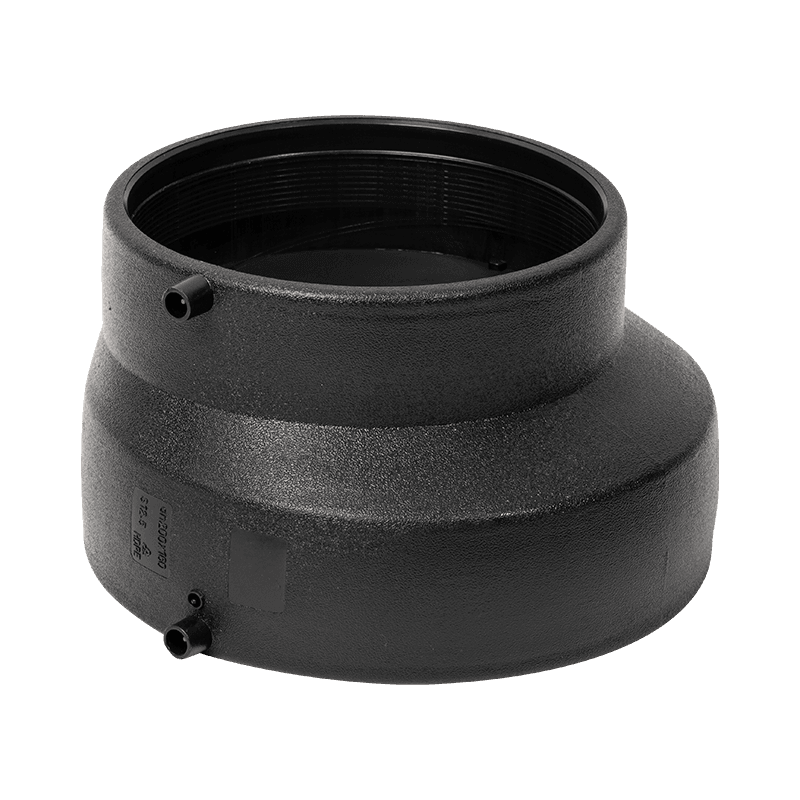
Where pipe diameters change within a building's drainage network, PE electric fusion eccentric reducers maintain a flat soffit (top of pipe), preventing solids from accumulating at the transition and keeping the system self-cleaning. This is particularly important in commercial kitchens and food-processing plants where grease and food particles must be continuously flushed.
Factories, refineries, and chemical plants generate process wastewater containing acids, alkalis, solvents, and suspended solids that rapidly degrade conventional metal or PVC piping. PE electrofusion fittings are chemically resistant to a broad range of substances across a pH range of approximately 1–14, making them a practical long-term solution in aggressive environments.
Common industrial applications include:
Unlike traditional arc-welded steel pipe joints, the electrofusion process requires no post-weld heat treatment, no radiographic inspection of individual welds, and no corrosion-resistant coating on the joint interior — reducing installation costs while improving the chemical resistance profile of the system.
Irrigation and field drainage networks in agricultural settings are often installed in remote areas with limited access to skilled tradespeople and precision tools. Electrofusion fittings are valued here because a properly programmed fusion controller produces a repeatable, operator-independent joint — a critical advantage when farm staff rather than specialist contractors perform installation and repairs.
Specific agricultural uses include:
Understanding which fitting type to select for a given drainage scenario is essential for system performance. The table below summarizes the principal fitting categories within a PE electrofusion series, their standard configurations, and the drainage contexts where they are most commonly applied.
| Fitting Type | Typical Size Range | Primary Drainage Application | Key Advantage |
|---|---|---|---|
| PE Electric Fusion Pipe Clamp | DN 63 – DN 315 | Pipeline repair; saddle tapping in live mains | No full-bore shutdown needed |
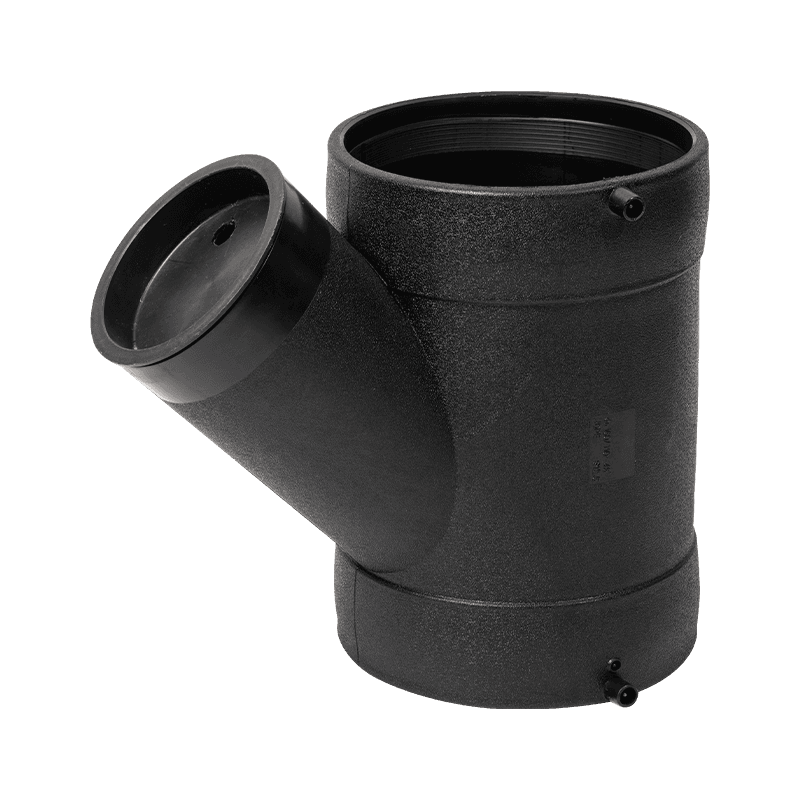
| Electrofusion Tee | DN 50 – DN 400 | Collector networks; branch take-offs | Equal or reduced branch options available |
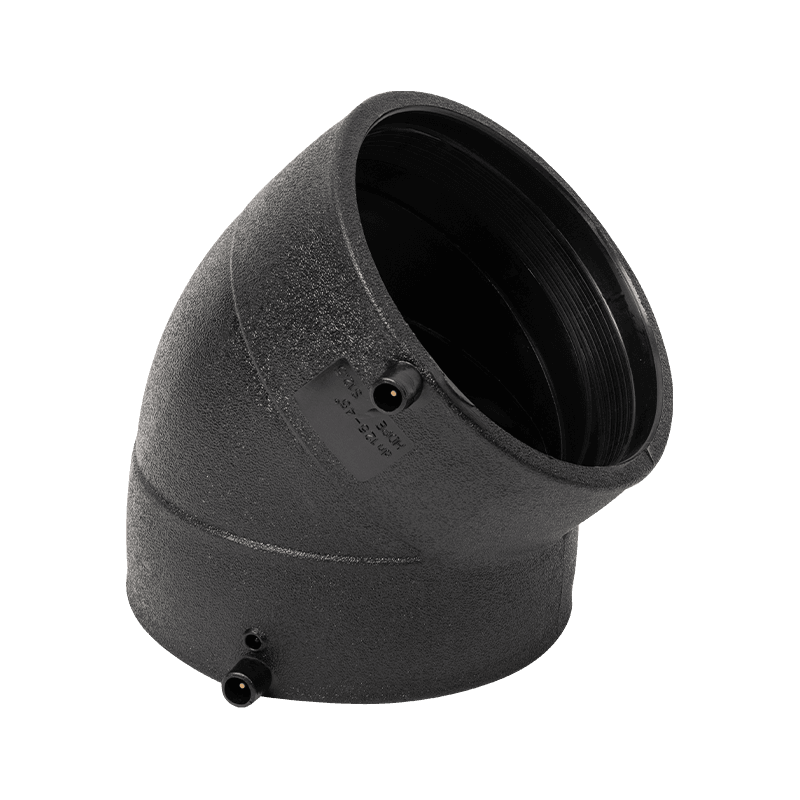
| Electrofusion Elbow | DN 50 – DN 315 | Direction changes around obstacles | 45° and 90° angles; low headloss profile |
| Electrofusion Eccentric Reducer | DN 63×50 – DN 315×250 | Diameter transitions in gravity drains | Flat-soffit design prevents solids buildup |
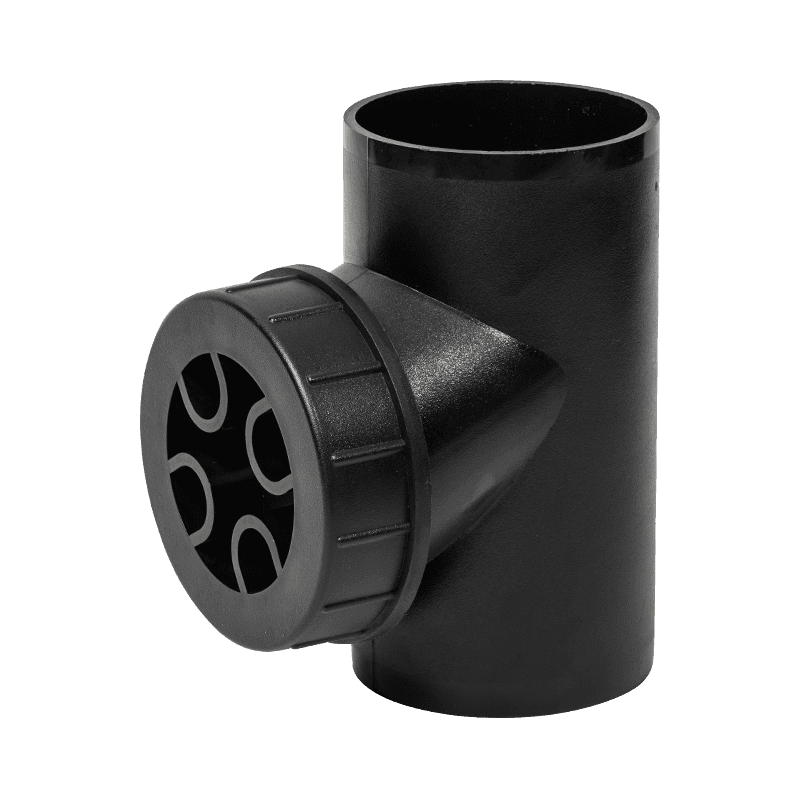
| PE EF Inspection Port | DN 110 – DN 400 | Maintenance access; CCTV survey points | Sealed when not in use; resealable |
Drainage engineers choosing between electrofusion, butt fusion, socket hot-melt, and mechanical joining must weigh performance, installation complexity, and long-term maintenance costs. Electrofusion offers several measurable advantages:
Aging concrete, clay, or cast-iron drainage infrastructure is frequently rehabilitated using PE lining techniques in which electrofusion fittings join individual liner segments inside the existing host pipe. This approach avoids full excavation of urban roads, reducing project costs by 30–50% and shrinking the construction footprint in densely built environments.
In horizontal directional drilling (HDD) installations, a string of PE pipes joined by electrofusion is pulled through a pre-drilled bore beneath roads, railways, or waterways. The fused joints must withstand combined tensile and bending loads during pullback — a loading scenario that conventional push-fit joints are unable to reliably sustain.
Electrofusion also plays an important role in pipe bursting, where an expanding head shatters the old pipe and simultaneously pulls a new PE string into position. Here, every joint in the new string must be as strong as the pipe itself to prevent joint fracture under the high tensile loads applied during bursting operations.
A properly fused PE joint requires no routine maintenance over its design life, which for PE100-grade pipe and fittings is typically rated at 50 years or more at standard operating conditions. However, systems equipped with PE electrofusion inspection port fittings enable periodic condition assessments without disrupting service.
Inspection ports installed at strategic intervals — typically every 50–100 m in buried gravity drains — allow operators to:
The gastight seal produced when the inspection port cap is refitted after maintenance prevents odors and hazardous sewer gases from escaping into the surrounding soil or building interiors — an increasingly important feature as urban air quality regulations tighten globally.
Drainage electrofusion fittings intended for public infrastructure projects must meet defined dimensional, mechanical, and fusion performance standards. Products manufactured in accordance with CJ/T 250-2007 (the Chinese industry standard for PE drainage pipe fittings) are subject to independent testing by accredited laboratories such as the National Chemical Building Materials Testing Center, covering:
Products that pass these tests can be reliably specified by project engineers, knowing that the stated performance characteristics are independently verified rather than self-declared by the manufacturer.
The technical performance of electrofusion fittings is only fully realized when installation procedures are correctly followed. The most common causes of joint failure in the field are not material defects but procedural errors, particularly inadequate pipe surface preparation.
The outer surface of the PE pipe must be scraped to a depth of at least 0.1–0.2 mm to remove the oxidized layer that forms during storage and UV exposure. An unscraped surface is the single most common cause of cold fusion zones — areas where melting is incomplete and the bond strength is greatly reduced.
Both the scraped pipe surface and the inner bore of the fitting must be cleaned with an approved isopropyl alcohol wipe and allowed to dry completely before the pipe is inserted. Even a thin film of moisture can prevent complete fusion.
The pipe and fitting must be held in alignment with a purpose-made clamp throughout the entire fusion and cooling cycle — typically 15–30 minutes for larger diameter fittings. Removing the clamp before cooling is complete is a leading cause of angular joint misalignment that concentrates stress at the joint during service.
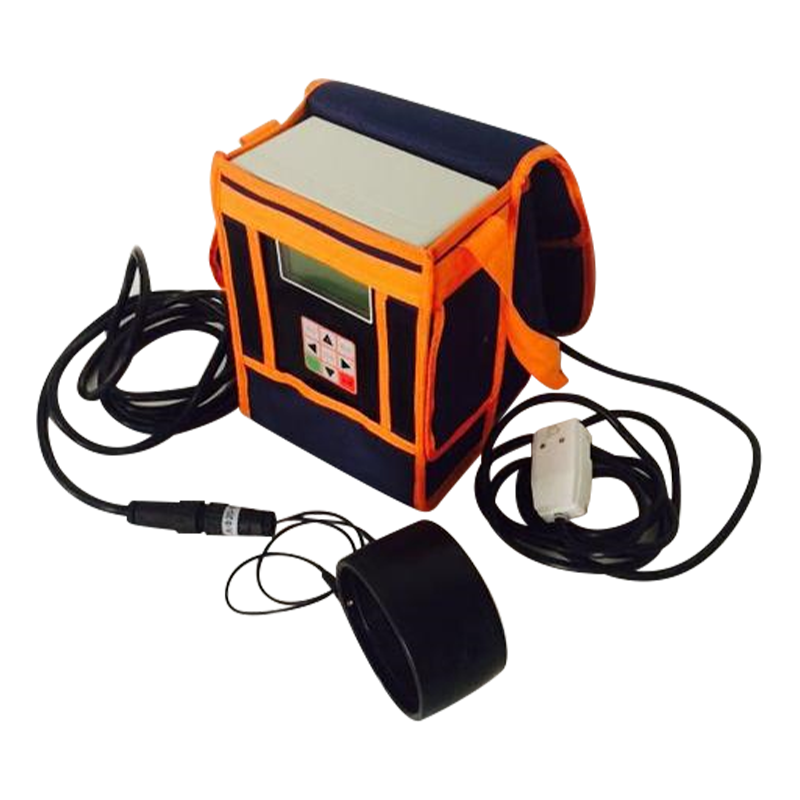
Before use, the fusion controller should have a current calibration certificate and the operator should verify that the fitting barcode has been correctly scanned and that the correct fusion parameters have been loaded. Most modern controllers store a complete fusion log for every joint made, providing traceable quality records for inspectors and project auditors.
Nyheter och information
2026-05-08
Vilket är bättre, HDPE sifonrör eller PVC-rör?
2026-04-30
Vilka är fördelarna med PE-smältrörskopplingar?
2026-04-24
Vad är en monteringsplatta?
2026-04-17
Vad är en PE-smältrörskoppling?
2026-04-10
Vilket är bättre: PE-smältrörskopplingar eller HDPE-smältkopplingar?
 General Manager Mr.Song +86-18868665013 / Miss Zhou +86-13757458992
 International Sales Manager: Jim Yao +86-18968349877
 +86-574-62939789
 Wechat/WhatsApp: +86-18968349877
 [email protected]; [email protected]
 Nr 147 Dushan, Sanqi Town, Yuyao City, Zhejiang-provinsen
Upphovsrätt © Ningbo Heqi Pipe Co., Ltd. All rights reserved. Grossist tillverkare av dräneringsrör Leverantör av dräneringsbeslag



 SV
SV

 русский
 Français
 日本語
日本語 한국어
한국어 Latine
 Tiếng Việt
 বাংলা
বাংলা ไทย
ไทย عربى
عربى Hrvatski
 čeština
 Nederlands
 dansk
dansk Pilipino
 Suomalainen
 Deutsch
 Magyar
 Indonesia
 italiano
 Gaeilge
 Bahasa Melayu
 فارسی
فارسی norsk
norsk Polskie
 Português
 Română
 Español
 Slovák
 svenska
 Türk
Türk